
Opening a Sustainable Future
Through Green Finance at Hoseo University
Green Finance
Green Finance
What Is Green Finance?
 Green Finance

The Strategic Flow of Capital Toward a Sustainable Future
Green Finance refers to financial activities that consider environmental sustainability.
It is a financial effort to direct resources toward environmentally friendly businesses to address climate change, resource waste, environmental pollution, and related challenges.
Green finance aimed at the climate crisis and carbon neutrality plays a central role in responding to severe climate risks and enabling sustainable economic growth.
Green finance is an important means of climate response by mobilizing capital to reduce carbon emissions and expand sustainable energy sources such as renewables.
Green bonds, sustainable investment, and other financial products are essential to achieving carbon neutrality, enabling companies and governments to implement emission reduction and climate risk management strategies through green finance.
Importance of Green Finance
| Climate Crisis Response |
As climate change accelerates, companies and financial institutions must conduct investment and financial activities that account for environmental risks. Green finance is a vital solution for managing these risks and pursuing sustainable growth. |
|---|---|
| Financial Support for Carbon Neutrality |
Green finance enables climate technology development, renewable energy projects, energy efficiency improvements, and other initiatives needed to achieve carbon neutrality. Such financial support is essential to reducing greenhouse gas emissions and building sustainable energy systems. |
| Policy and Regulatory Change |
Governments worldwide are strengthening sustainability policies and regulations, and green finance is becoming an essential field |
| Sustainable Growth |
Through balanced financial models that align environmental protection with economic growth, green finance drives sustainable economic development. |
Applications of Green Finance
Green finance is applied across diverse sectors and plays a vital role in sustainable development and climate response. Key application areas include the following.
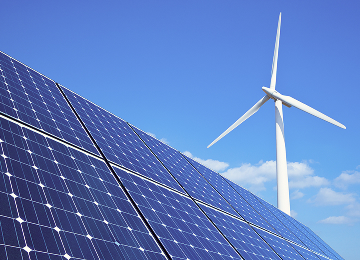
Application 1
Renewable Energy Projects
Investment in solar, wind, hydro, and other renewable energy projects reduces carbon emissions and builds sustainable energy systems. Green finance plays a key role in funding these projects.

Application 2
Eco-Friendly Infrastructure Development
Funding is needed for sustainable urban development, green buildings, smart grids, and other environmentally friendly infrastructure. Green finance supports investment and financing for such projects and enhances environmental sustainability.

Application 3
Transition to a Low-Carbon Economy
Green finance helps reduce emissions, improve energy efficiency, and support sustainable manufacturing and supply chain management. It provides capital and risk management for industrial transformation toward a low-carbon economy.

Application 4
Environmental Risk Management
For financial institutions and companies assessing and managing environmental risks, green finance offers risk management and strategic investment approaches. As environmental regulation intensifies, such financial services are increasingly important.

Application 5
Green Bonds and Sustainable Investment
Sustainability-focused products such as green bonds, socially responsible investment (SRI), and ESG (environmental, social, governance) investment are expanding. Through these instruments, investors can fulfill environmental responsibilities while pursuing stable returns.
Market Trends and Outlook
(Market Boom)
Explosive Market Growth
Continued growth in cumulative issuance of
GSS (Green · Social · Sustainability) and SLB bonds
(Capital Shift)
Major Capital Reallocation
Assets of UN PRI signatories increasingly
focused on ESG-integrated investment
(Profit Reset)
Transformation of Profit Structures
Green project revenues at major global banks
establishing themselves as core earnings sources
Combining Environmental Engineering and Finance — Now Is the Opportunity
With stronger global regulation and mandatory disclosure, demand is surging for interdisciplinary professionals who understand both environmental technology and finance.

Opportunity 1
Global Regulatory Response
Companies that cannot respond to tightening environmental regulations such as the EU Carbon Border Adjustment Mechanism (CBAM) and the U.S. Inflation Reduction Act (IRA) risk being left behind.
Opportunity 2
Trustworthy Data
With the International Sustainability Standards Board (ISSB) and K-Taxonomy, companies must prove environmental performance in the language of finance, making data-based impact assessment capabilities essential.
Opportunity 3
Preventing Greenwashing
Experts are needed to prevent greenwashing risks through scientific verification and ensure capital flows smoothly to SMEs with strong technologies.
-
Quick Menu
-
Notices
-
Request a Brochure
-
Seminar Registration
-
Application

20, Hoseo-ro 79beon-gil, Baebang-eup, Asan-si, Chungcheongnam-do, Republic of Korea
TEL Seoul Campus 02-2059-2382 / Asan Campus 041-540-5741, 5195 Business Registration No. 312-82-10256 MAIL shk0128@hoseo.edu© HOSEO UNIVERSITY. All rights reserved.